Getting an AI coach for athletes to play reliably, then making it sound human
An AI mental-training app writes a personal visualisation session for each athlete and reads it to them as guided audio. MOHARA took over the app just before it started charging, made playback work anywhere, even offline, then gave the coach expressive voices and a memory.
- Sector
- Consumer, sport and wellbeing
- What we built
- Reliable offline playback, expressive voices and memory, across iOS, Android and web
- Timeframe
- October 2025 to May 2026
- Outcomes
- Sessions that play reliably on any signal, a setup approach the client rolled out across its whole backend, and regular releases on iOS and Android for six months.
The client
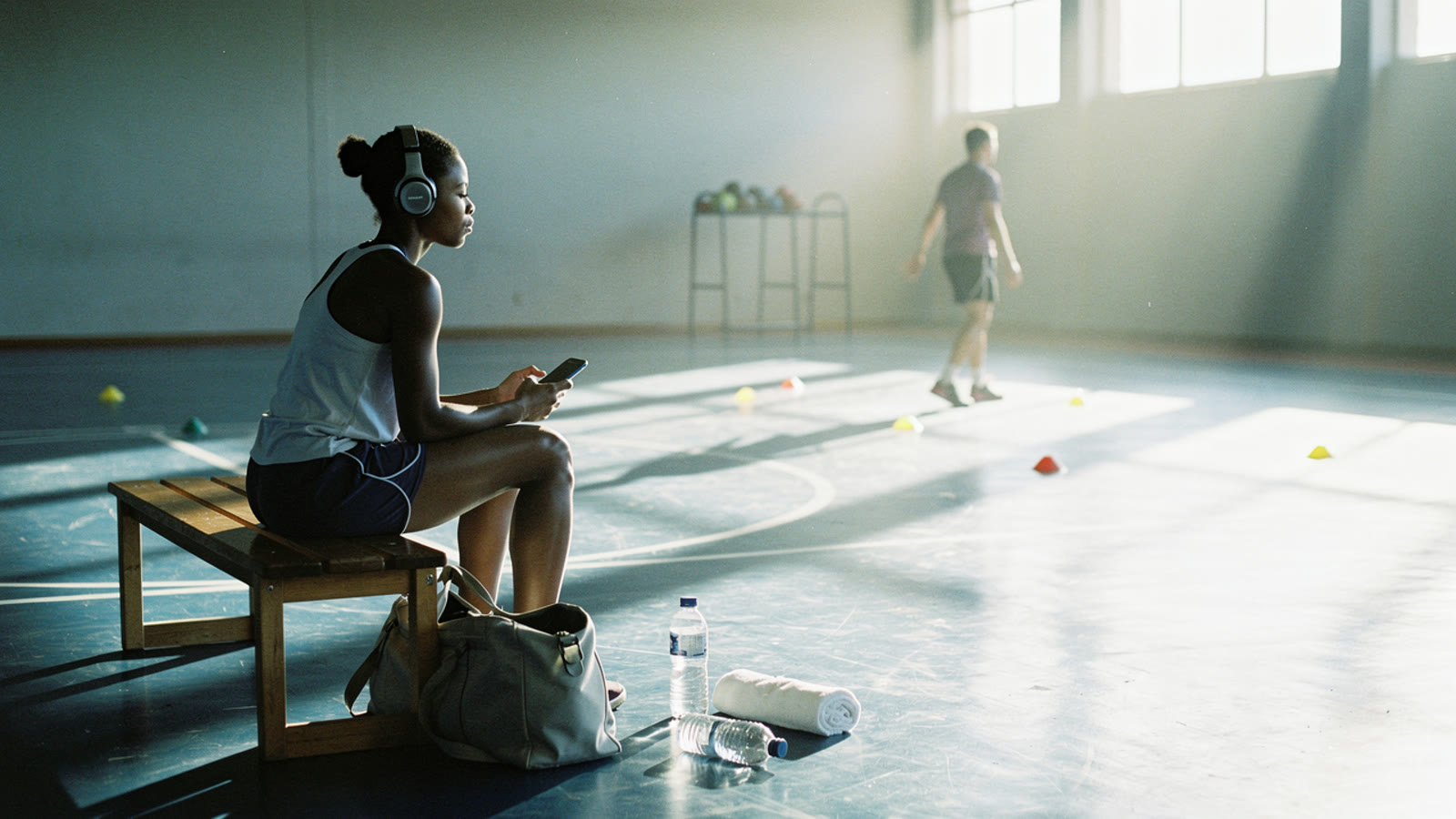
The client is an early-stage startup with a mental-training app for athletes. An athlete describes a goal, a match or an injury, and the app writes a session just for them, read aloud with pauses and ambient sound. Athletes use it for skill work, recovery, game preparation and resilience.
What they were going after
The client was about to switch on its paywall. Athletes listen on the track, in the gym and on the bus, often on a weak signal. If the audio cuts out mid-session, they lose the moment they paid for.
The client needed playback that held up anywhere, and a team that could take the app over and keep shipping.
What we built.
Reliable playback
Sessions are saved on the device so they play offline and start straight away. The player was rebuilt on a purpose-built audio engine, with pauses built into the audio so it stays in sync, and the audio pipeline was rebuilt so no audio goes missing and there are fewer gaps between segments. Lock-screen controls and crash monitoring came with it.
A faster setup
Setup steps now run at the same time instead of one after another, and four prompts became one.
Expressive voices
After testing three voice providers in a listening session, the coach's voice now gets more intense for game pressure and calmer for grounding. Every existing user's voice was mapped across.
Memory
The app remembers each athlete's sport, goals and setting between sessions.
Voice-controlled pauses
So an athlete can say "next" to move on.
How we worked.
We worked with the founder every day, with check-ins and test builds. Our team was split between South Africa, which led the playback and reliability work, and Bangkok, which ran the voice work as a research project in stages.
We diagnosed before we patched anything. The team simulated slow networks to find the real faults, then built two versions of the player side by side: a quick fix and a move to a purpose-built audio engine. Both went to test, and we chose the engine because it fixed the cause of the dropouts, not just the symptoms.
What it returned.

Have a problem like this one?
The team that built this for this client is the team you would work with. Tell us what you are trying to solve.